I take complex, regulated domains from nothing to shipped product.
What I do
I work at the seam where physical infrastructure meets financial infrastructure, with a forecasting layer between them. In energy technology I designed a full product portfolio end to end: renewable energy communities, utility-scale photovoltaic plants, and the platforms that manage and forecast them, including the payment and settlement integrations that make them commercially viable. The financial side was never a separate interest. It is what an energy asset requires in order to be a business rather than a science project.
I design the system and I am accountable for it shipping. Those are normally two people, which is why the architecture usually survives contact with the schedule about as well as you would expect.
Where I trained
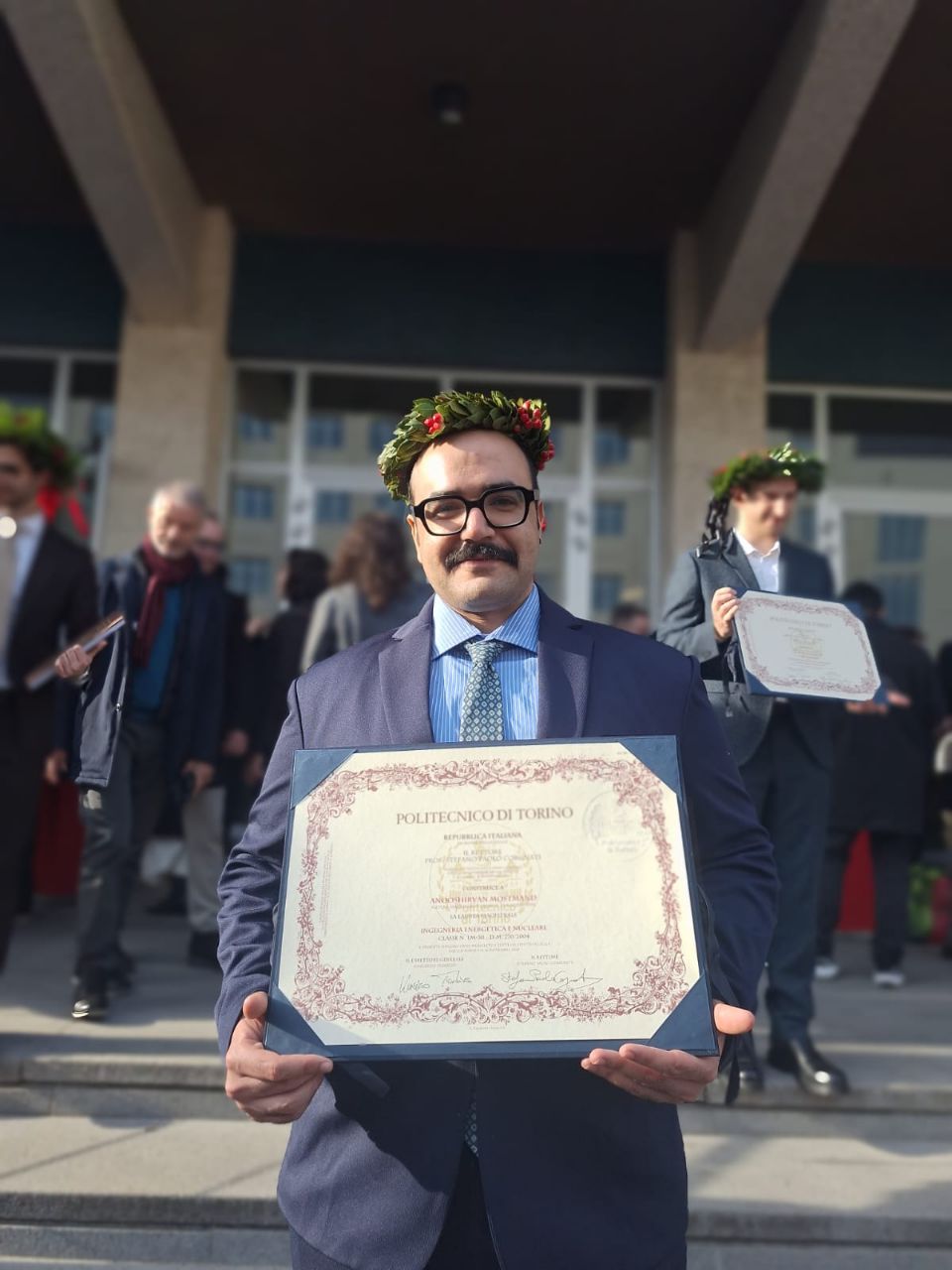
I came to software through machines. My first degree was mechanical engineering, in Iran, taught with a workshop attached: engines, pressure systems, hydraulics, tolerances that either hold or do not. Then a master's in renewable energy systems at Politecnico di Torino, with a thesis written inside the EU Horizon project MANAGE 5.0: coupling building information and building energy models with deep learning to forecast how a working automotive plant actually consumes energy, and putting that forecast in front of the people running it. Earlier I had worked the same industry from the other end, on the economics of green hydrogen for hard-to-abate sectors. Both only resolve if you hold the physics, the money, and the policy in view at once, which turned out to be the shape of everything since.
I also took the Intensive Master in Business Management at INFOR ELEA, a private academy outside Turin taught by working managers rather than academics, which gave me the language of the other side of the table: unit economics, process design, and what a board actually reads. I am now completing the software architecture programme at Global Dev Experts, run by practising principal architects, with a neo-banking platform as the reference architecture. Energy and financial infrastructure share their hardest constraints, and I wanted formal grounding in the second before writing about it.
What I have built
A modular platform operating renewable energy communities under EU energy-sharing rules, with metering, settlement, and incentive distribution inside it. Validation and yield modelling for photovoltaic plants in the 10 to 40 MW range, used to defend investment cases. The machine learning and analytics layer for MANAGE 5.0, an EU Horizon project on Industry 5.0, forecasting energy behaviour inside a large automotive plant. Predictive maintenance on wind turbines. Full technical ownership of a financial technology platform where money moves under audit. Each one is written up on the work page by the decision that mattered rather than the technology used.
I build AI systems in domains where being confidently wrong has a cost: a plant that underperforms, a settlement that does not reconcile. Most of the work sits underneath the model, in the data model, the sensor pipeline, and knowing which questions the data can actually answer. The model is the small part, and the replaceable one.
What I like
I have never seen a dividing line between art and numbers. I have played jazz bass for more than fifteen years, and improvising over a form asks for what reading a system asks for: hold the structure, listen to what is actually happening rather than what you expected, and commit before the information is complete. Chess for the structure, poker for the incomplete information, mathematics and physics because they were the first things that ever felt like honesty.
I follow finance and markets with the same appetite I bring to technology, I read constantly and across fields, and I have been a sustainability enthusiast long enough for it to work as a constraint rather than a position. Art and people, then numbers and systems. It has never felt like two interests.
I work on a small number of engagements at a time, because depth is the constraint rather than capacity, and I would rather decline than deliver something thin. What I learn gets written up: the reports here are the substance of the practice, published in full rather than gated.
Based in Milan, active across the EU, South Korea, and Dubai.